

2 min read
How to Prepare Your Venue’s Packages and Policies for an AI Assistant
Before AI can represent your venue well, it needs the same thing a great new team member needs: clear, current information.
3 min read
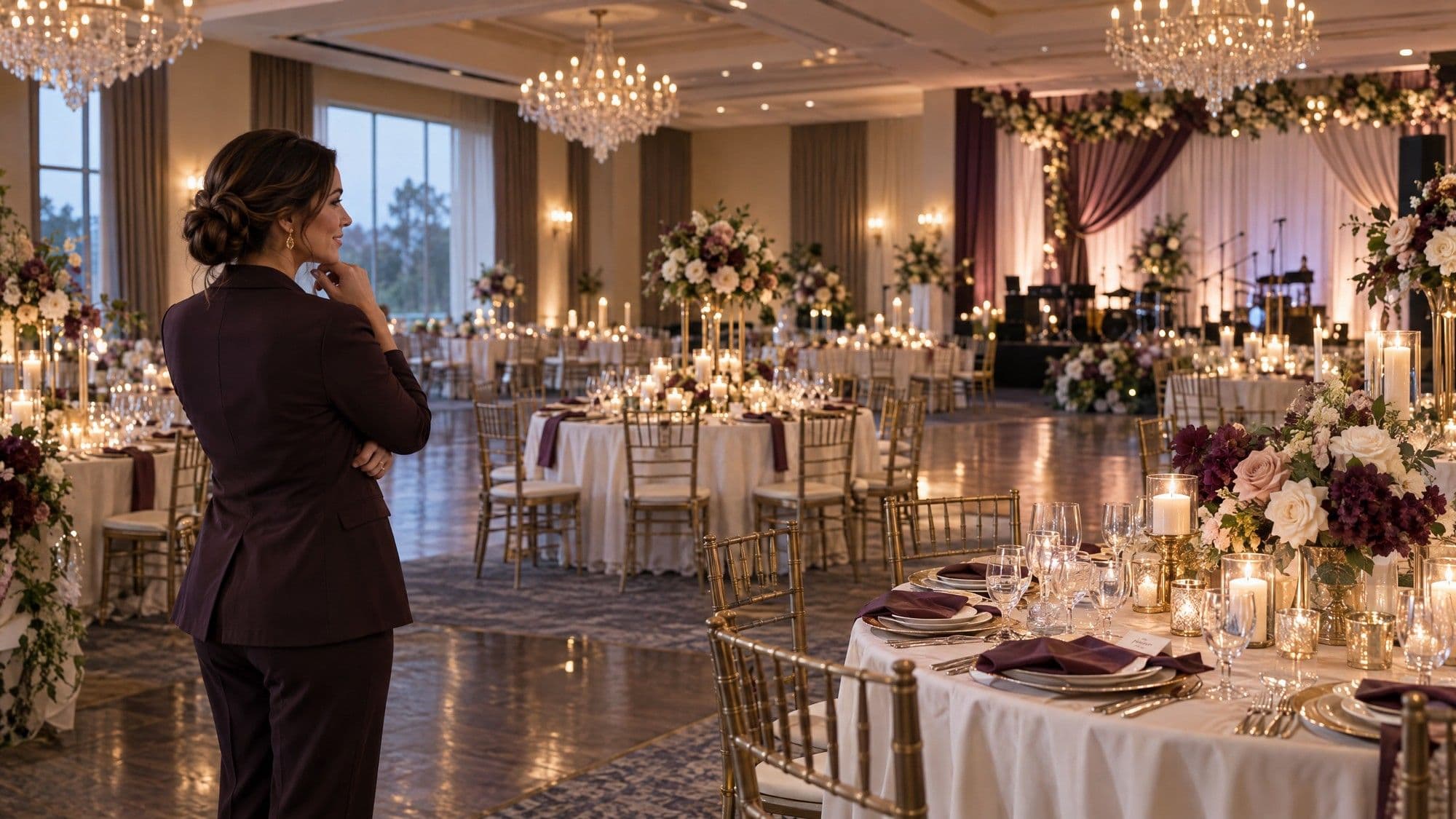
Picture the end of a long day at your venue. You have given tours, answered planning questions, handled vendor calls, and solved the dozen little problems nobody else ever saw.
Then you open your inbox and find three new inquiries, two follow-ups that never went out, and a proposal that still needs attention.
That is the work venue automation is supposed to help with.
But once you add automation, how do you know whether it is actually helping? Not because the software sent 100 messages. Not because a dashboard looks busy. And not because an AI assistant sounds impressive.
The question is simple: What got better for your team, your couples, and your business?
Before changing anything, spend a few weeks measuring what your team is already doing. How many inquiries come in? How long does the first response take? How many tours get booked and completed? How many proposals go out? How much staff time goes into answering routine questions and following up?
You do not need a complicated analytics project. You need a baseline that lets you compare your old process with the new one.
And do not ignore the messy parts. If a fast automated reply gives the wrong availability and your team spends 20 minutes fixing it, that matters too.
The easiest place to see value is usually the work your team does over and over again: acknowledging an inquiry, answering the same FAQs, offering tour times, sending reminders, following up, and summarizing a conversation for another team member.
Ask one practical question: How many staff minutes did this task take before, and how many does it take now—including review or correction time?
Time saved is not the number of automated messages. It is the staff time you genuinely got back.
Bookings matter, of course. But bookings are affected by pricing, seasonality, available dates, lead quality, the tour itself, and dozens of other factors.
Tours tell you something more immediate: Are faster, more consistent conversations actually turning interest into a real visit?
If tours go up but no-shows also climb, you may need better reminders. If completed tours rise but proposals do not, the issue may not be response time at all. Measuring the steps separately helps you find the real bottleneck.
This one matters. If your team saves eight hours a week, that does not automatically mean you saved eight hours of payroll. Maybe those hours were used to give more tours, improve planning, train staff, or simply make wedding season less exhausting.
Those are real outcomes. Label them accurately.
The same goes for bookings. A signed contract is revenue, not profit. If you are calculating return, look at the contribution after the direct costs associated with that event rather than treating the entire contract value as gain.
At the end of 30 days, you should be able to answer four things: Did routine work actually decrease? Did more qualified couples move to tours? Did accuracy and service quality hold? And where did the value show up—time, capacity, bookings, client experience, or some combination?
Sometimes the payoff is another booking. Sometimes it is a faster response. Sometimes it is a coordinator who no longer spends Sunday morning catching up on follow-ups.
For venue owners, that matters. Technology should not simply make the business do more. It should help your people spend more of their time on the work they are uniquely good at.
That is how we think about Ella: not as a replacement for your team, but as a way to give them better timing, cleaner context, and more capacity for the conversations that build trust.
If you want to evaluate Alpha Venue for your venue, bring your real inquiry volume, average response time, tour numbers, follow-up process, and the tasks that consume the most staff time. We’ll walk through where Ella may help and what you should measure to know whether it is actually paying off.
2 min read
Before AI can represent your venue well, it needs the same thing a great new team member needs: clear, current information.

2 min read
The right AI should fit your venue’s operation—not force your venue to fit the software.

2 min read
Before you spend more money generating leads, make sure the couples already raising their hands have a clear path to a tour.
45 minutes to see how Ella can help your venue.
Every lead answered. Every follow-up sent. Every wedding planned.